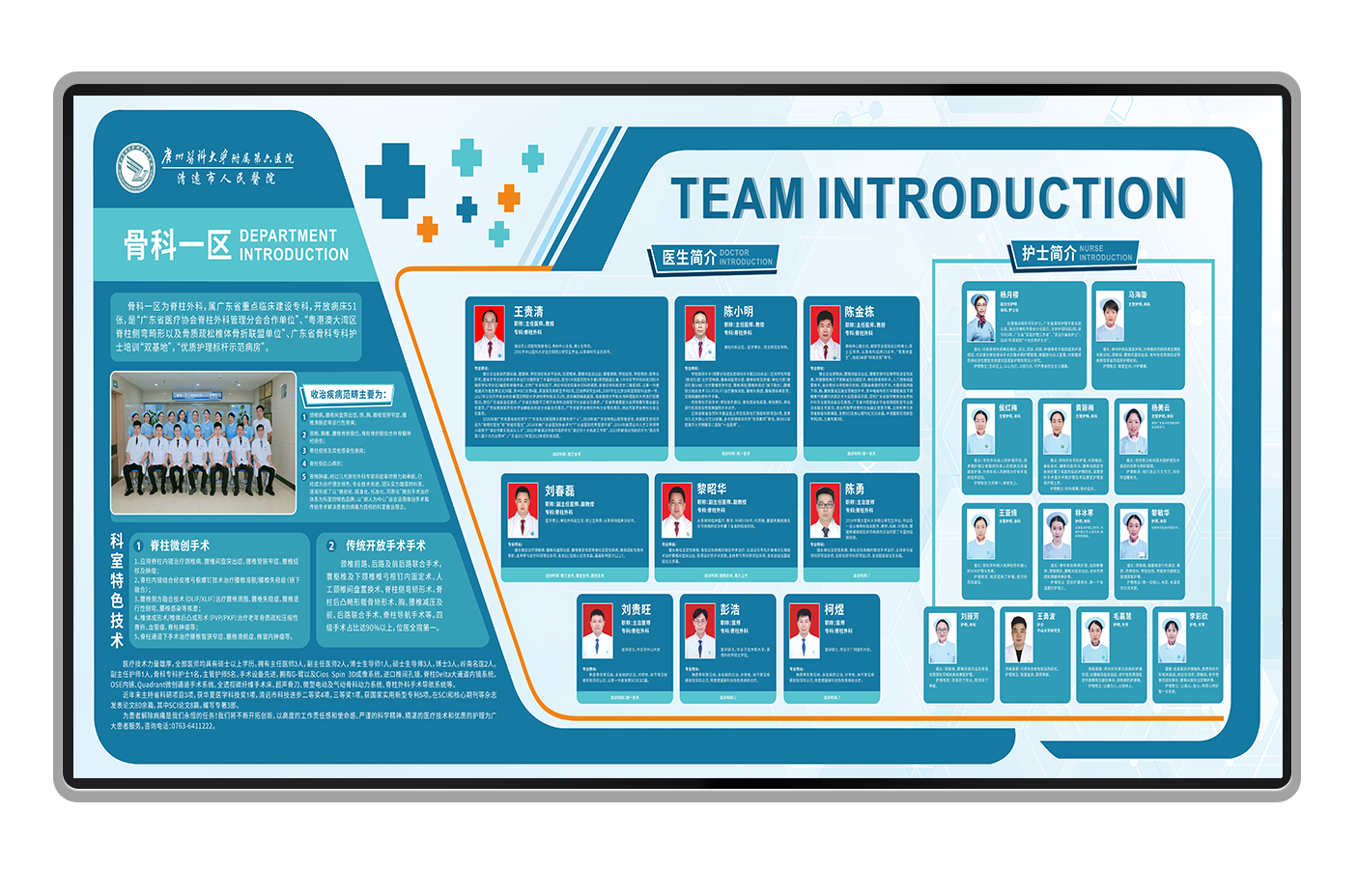
Information Release-DXKC Queue sywtem -Dingxin Shenzhen Information Technology Co., Ltd.
0755-23243371
Information Release

Write a sentence here to introduce advantages, features, or anything else you want to explain

1 System Summary

1.1 Background

Hospitals are important places that are closely bound up with people's daily life, and a healthcare service window that society pays close attention to. As the information age advances, hospitals are gradually transforming toward digitalization, informatization and intelligence, and society has placed new demands on hospital service quality and the degree of humanization of that service. Humanized services should include hospital wayfinding signage, hospital digital signage and the broadcasting of healthcare knowledge. In response to this need, the Hospital Multimedia Information Publishing System has emerged. It not only enables the sharing of healthcare resources and thereby significantly improves the hospital's management and service levels, but also raises the operational efficiency of the whole hospital and enhances its brand value and core competitiveness.

1.2 Solution Features

  • Adopts a B/S architecture, which makes management and maintenance convenient for the hospital. Any authorized computer on the intranet can log in to perform management.
  • Single-level or multi-level organizational management structures and content publishing structures can be configured, which facilitates unified management and control.
  • The playback terminal, publishing time and publishing cycle of playback content can be defined precisely. Meanwhile, different publishing points support the playback of the same or different content.
  • Playback content can be combined flexibly and may consist of video, text, images, animation, data information, documents and other types of content.
  • Various display styles can be freely defined. The system provides a full-screen publishing mode, a custom-window publishing mode and a dynamic information publishing mode.
  • Supports a variety of display devices, including LCD monitors, networked LCD all-in-one machines, networked touch terminals and multi-screen splicing display walls.
  • Supports a template generator. Every terminal display template supports flexible adjustment of page layout, style, animation and attributes by arbitrary drag-and-drop, and the page can be split at will so that queue-calling information and multimedia assets can be displayed in combination, meeting the display requirements of special scenarios.
  • Supports scheduled health education, including emergency message insertion, scrolling text tickers and video carousel. In the same display area of a terminal, it supports image and video carousel: the images are bright and clear, video playback is continuous without animation artifacts or mosaic blocks, and the picture is smooth.
  • All playback, control and maintenance are carried out through the management software, with flexible zoned, grouped and hierarchical management. Loop playback, insertion playback and background switching are supported, as is playback for a custom duration. Content can be played by week or by date.
  • Supports sensitive-word detection, and the sensitive-word lexicon can be maintained by the users themselves.
  • Supports review and approval management: all content published to the terminal display must be approved by the administrator before it can be delivered.
  • Supports publishing of doctor scheduling information, which makes it convenient for patients to inquire.
  • Supports asset management: assets such as images, audio and video in mainstream formats can be uploaded and managed in groups.
  • Playback terminals in the same group support synchronized playback of images and videos, which avoids inconsistent playback progress among terminals showing the same content.

2 System Overview The Multimedia Information Publishing System is a professional system for the publishing and playback of digital media content. It can replace conventional promotional methods such as putting up posters and playing files: the content to be promoted and published is edited and produced in digital form, then transmitted over the network to designated terminal devices for playback, and centrally managed in an informatized manner, so as to achieve designated publishing, real-time updating and centralized management of information content.


3 System Composition

1. Management System Mainly responsible for program production, program management, channel creation, review and approval management, system permission management, and other functions.

2. Playback System Mainly responsible for program playback, on-site inquiry, message insertion, outlet monitoring, and other functions.

3. Display Terminals LCD TVs, LCD all-in-one display screens, full-color LED screens, splicing display walls, etc.

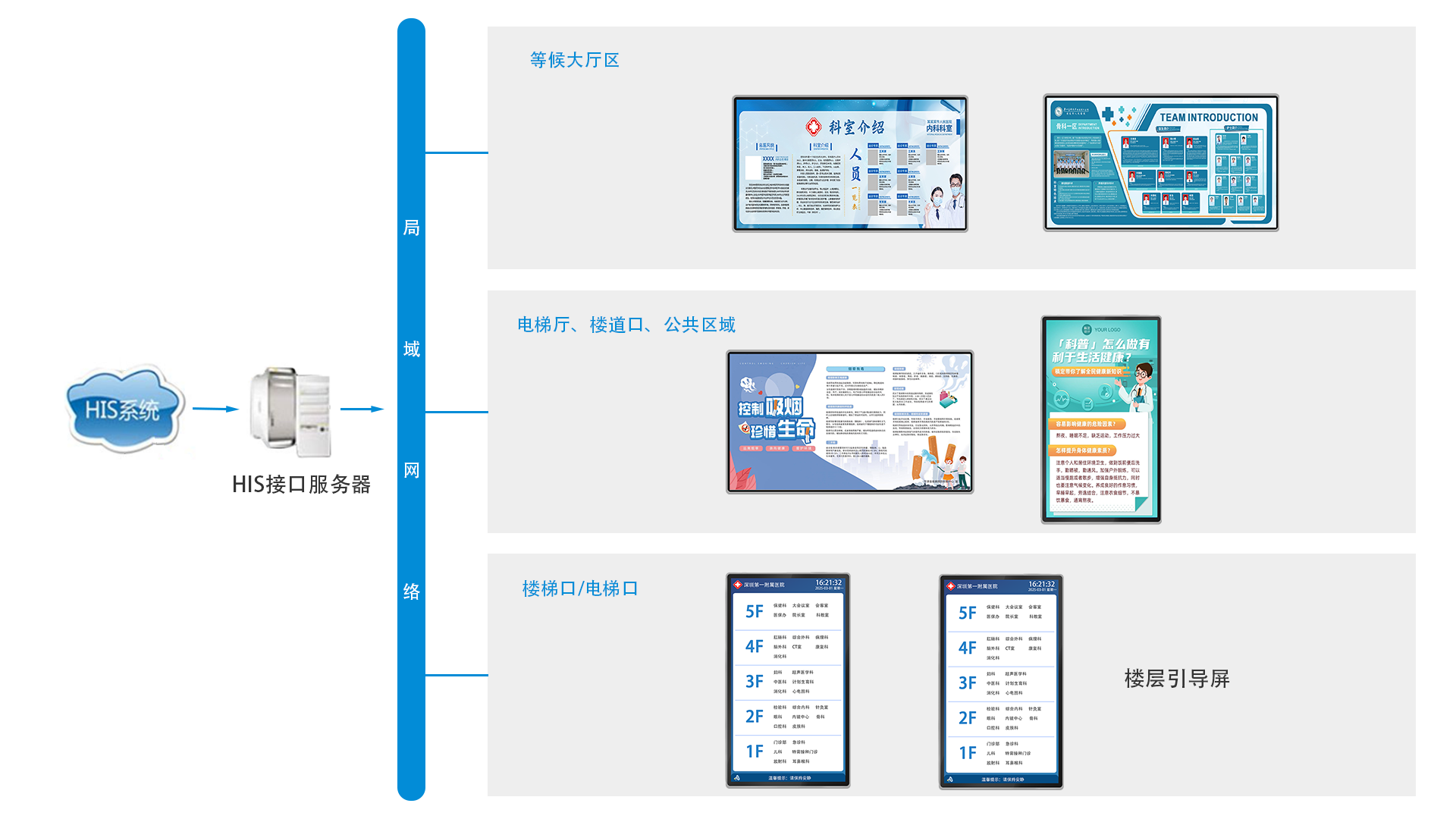
4 System Wiring Diagram